
1215 vs 12L14 vs 11SMn30 vs 11SMnPb30 vs SUM23 and SUM24L
Short Answer
1215, 11SMn30 / 1.0715, the historical 9SMn28 search term and SUM23 are commonly searched as non-leaded free-machining steel families. 12L14, 11SMnPb30 / 1.0718 and SUM24L are commonly searched as leaded free-machining steel families. These designations are useful for supplier discovery, but they are not purchase-order substitutes for one another. A buyer should state one governing standard, grade, product form, size, tolerance, delivery condition, inspection document and applicable lead restriction before a cold drawn bar is quoted.
How Should Buyers Read These Grade Names?
| Purchasing route | Common search designations | What must still be confirmed |
|---|---|---|
| SAE / North American, non-leaded | 1215, SAE 1215, UNS G12150 | Applicable SAE chemistry and cold-finished bar requirements |
| European, non-leaded | 11SMn30, historical 9SMn28, 1.0715 | Current EN delivery condition, dimensions and inspection requirements |
| Japanese, non-leaded family | SUM23 | Current JIS grade requirements and required product form |
| SAE / North American, leaded | 12L14, SAE 12L14, UNS G12144 | Applicable SAE chemistry, lead requirement and cold-finished condition |
| European, leaded | 11SMnPb30, 1.0718 | Current EN delivery condition, lead content and inspection requirements |
| Japanese, leaded family | SUM24L | Current JIS grade requirements, lead restriction and product form |
Important: This table groups designations by purchasing intent and free-machining route. It does not certify chemical or mechanical equivalence. The accepted standard and limits on the buyer’s drawing or purchase order control the supply.
What Is the Difference Between 1215 and 12L14?
- 1215 purchasing intent: sulfur-based free-machining carbon steel where lead is not intentionally specified as the machinability addition.
- 12L14 purchasing intent: leaded free-machining carbon steel selected for high machinability in suitable applications.
- Compliance difference: leaded grades require an explicit review of market, customer and end-use restrictions. Do not substitute a leaded grade because it machines faster.
- Part performance: machinability does not replace review of strength, ductility, welding, heat treatment, coating and service conditions.
Are 1215 and 11SMn30 the Same?
No automatic substitution should be made. Buyers often compare them because both can serve non-leaded free-machining applications, but the designation systems, chemistry limits, delivery conditions and inspection rules come from different standards. State either the SAE route or the EN route and attach the required limits. If a cross-standard alternative is acceptable, write the acceptance rule into the RFQ instead of using the word “equivalent” alone.
9SMn28 Steel and the 11SMn30 / 1.0715 Purchasing Route
Short answer: Saarstahl publishes its producer material sheet as 11SMn30 (9SMn28) and identifies material number 1.0715, a cold-drawn +C condition and the older DIN EN 10087 / DIN EN 10277-3 reference route. This supports 9SMn28 steel as a historical buyer search term for an 11SMn30 / 1.0715 enquiry in that producer context.
For a current RFQ, do not order by the historical name alone. Swiss Steel currently states that 11SMn30+BX is assigned to material number 1.0715 and conforms to DIN EN ISO 683-4:2018 and DIN EN 10277:2018. The purchase order should name the required current standard and edition, exact grade, product form, delivery condition, dimensions, quantity and MTC.
- Do not turn the search alias into a universal equality: the supplier and buyer must agree the current ordered designation and limits.
- Do not infer cross-market substitution: SAE 1215, SUM22 or SUM23 still require their own governing standard and written buyer approval.
- Do not confuse material numbers: the cited Saarstahl and Swiss Steel routes identify 11SMn30 with 1.0715; material number 1.0711 is not used as the 9SMn28 route on this page.
- Do not infer batch conformity: producer datasheets are reference evidence, not Junxiong heat certificates or proof of a future order.
Primary producer references:
- Saarstahl 11SMn30 (9SMn28) material specification sheet: producer mapping, material number 1.0715 and cold-drawn +C data.
- Swiss Steel free-cutting steels: current producer route assigning 11SMn30+BX to 1.0715 and DIN EN ISO 683-4:2018 / DIN EN 10277:2018.
1.0711 Steel: Confirm the Grade Name and Product Standard
Short answer: the material number 1.0711 is not enough for a safe quotation. Public references use it in different designation and product-route contexts, including a 9S20 free-cutting-steel route and a 10S10 precision-tube route. The RFQ must state the exact grade name, governing standard and edition, solid bar or tube product form, delivery condition, dimensions and inspection document.
| Public search route | What the source supports | Required purchasing boundary |
|---|---|---|
| 1.0711 / 9S20 | Marex Distribution publishes 1.0711 / 9S20 in its public free-cutting-steel table. This is a distributor reference, not a substitute for the ordered standard. | For a solid product enquiry, state the exact accepted grade, solid-product standard, bright/cold-finished route, condition, dimensions and inspection requirements. |
| 1.0711 / 10S10 | Applus Materials Portal publishes a 10S10 / 1.0711 route in the DIN EN 10305-1 precision-tube context. DIN Media identifies EN 10305-1 as a seamless cold-drawn precision-tube standard. | Do not convert a tube material reference into a solid-bar purchase specification. |
| Solid free-cutting bar or wire rod | DIN EN ISO 683-4 is the current free-cutting steel bar and wire-rod specification route that replaced DIN EN 10087. | The public scope page does not by itself approve a specific 1.0711 solid-bar mapping. State the accepted grade and edition plus the separately ordered bright or cold-finished product route. |
| Historical 9SMn28 search | The producer evidence cited above on this page maps 9SMn28 to 11SMn30 / 1.0715. | Never relabel 9SMn28 / 11SMn30 / 1.0715 as 1.0711. |
| Batch acceptance | Online cross-references help identify what must be clarified before quotation. | The approved purchase order, heat identity, matching MTC and agreed inspection results control acceptance. |
Evidence boundary: this page does not claim current 1.0711 stock, a matching heat, a grade-verified photograph, a shipment record or a public batch MTC. Junxiong will review feasibility only after the buyer resolves the designation, standard and product form.
Reference routes used for this disambiguation:
- Marex Distribution: public free-cutting-steel table listing 1.0711 / 9S20 as a distributor reference.
- Applus Materials Portal: 10S10 / 1.0711 in a precision-tube context.
- DIN Media: DIN EN 10305-1 for seamless cold-drawn precision tubes.
- DIN Media: DIN EN ISO 683-4 for free-cutting steel bars and wire rods.
Are 12L14 and 11SMnPb30 the Same?
They are commonly compared as leaded free-machining steel families, but they are not interchangeable without engineering and purchasing approval. The buyer must confirm the governing standard, lead requirement, section size, cold-finished condition and any regulatory restriction. For export orders, the destination country and end use should be disclosed before material is selected.
How Do SUM23 and SUM24L Fit the Comparison?
SUM23 is commonly searched with non-leaded free-machining steel routes, while SUM24L is commonly searched with leaded free-machining routes. Orders calling for Japanese designations should reference the applicable edition of JIS G 4804 and the exact grade. A search alias is not sufficient evidence for acceptance.
Which Standards Should Be Named in the RFQ?
The applicable document depends on the requested designation and product condition. Useful starting references include:
- SAE J403 for SAE carbon steel chemical compositions.
- ASTM A108-24 for carbon and alloy cold-finished steel bars.
- EN 10277 for bright steel product technical delivery conditions.
- JIS G 4804 for free-cutting steels.
- Saarstahl 11SMn30 (9SMn28) for the producer’s historical-name and 1.0715 reference context.
Always use the edition required by the contract. If the drawing, purchase order and standard conflict, resolve the conflict before production.
Which Bar Shapes Can Be Reviewed?
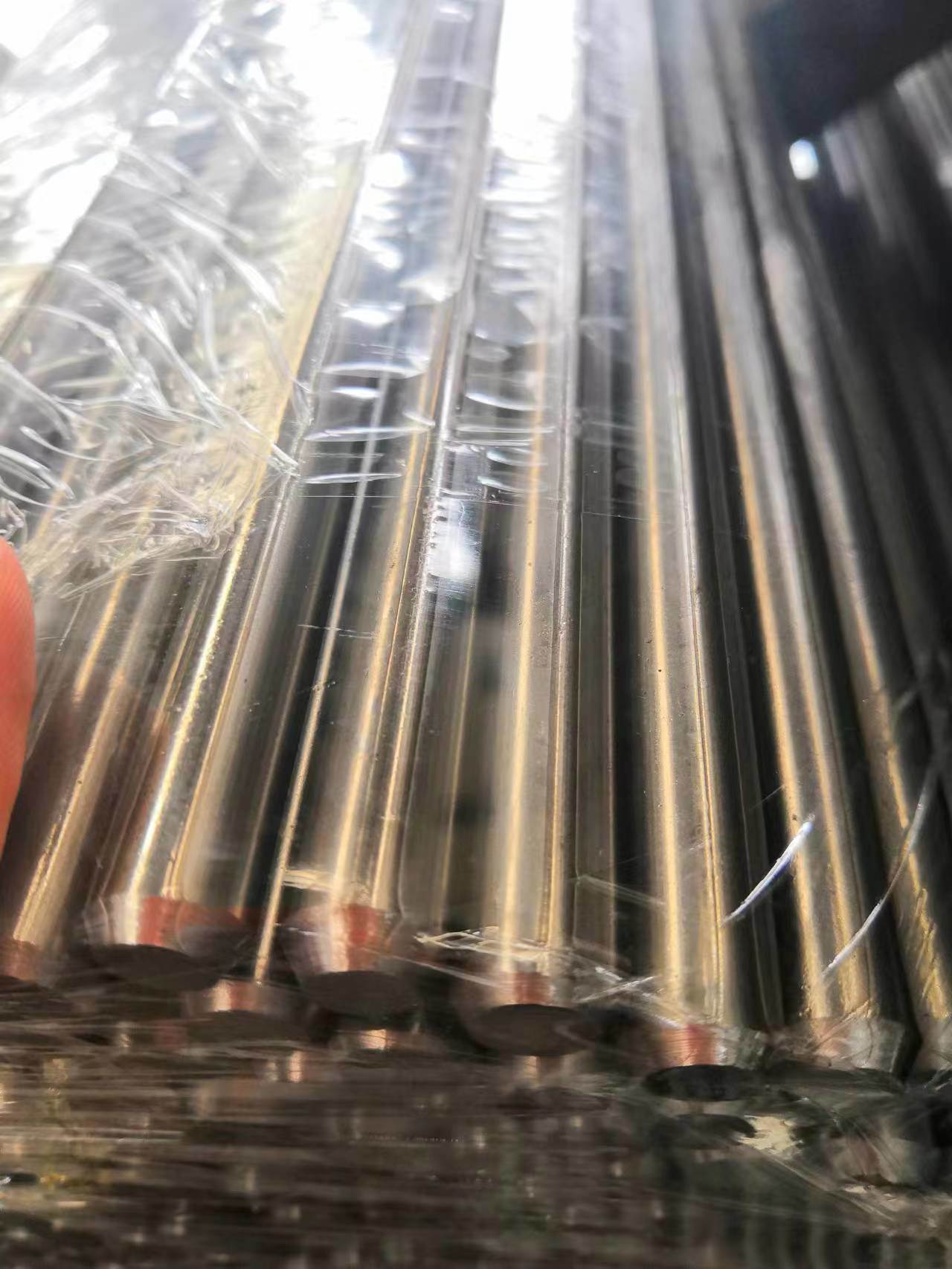
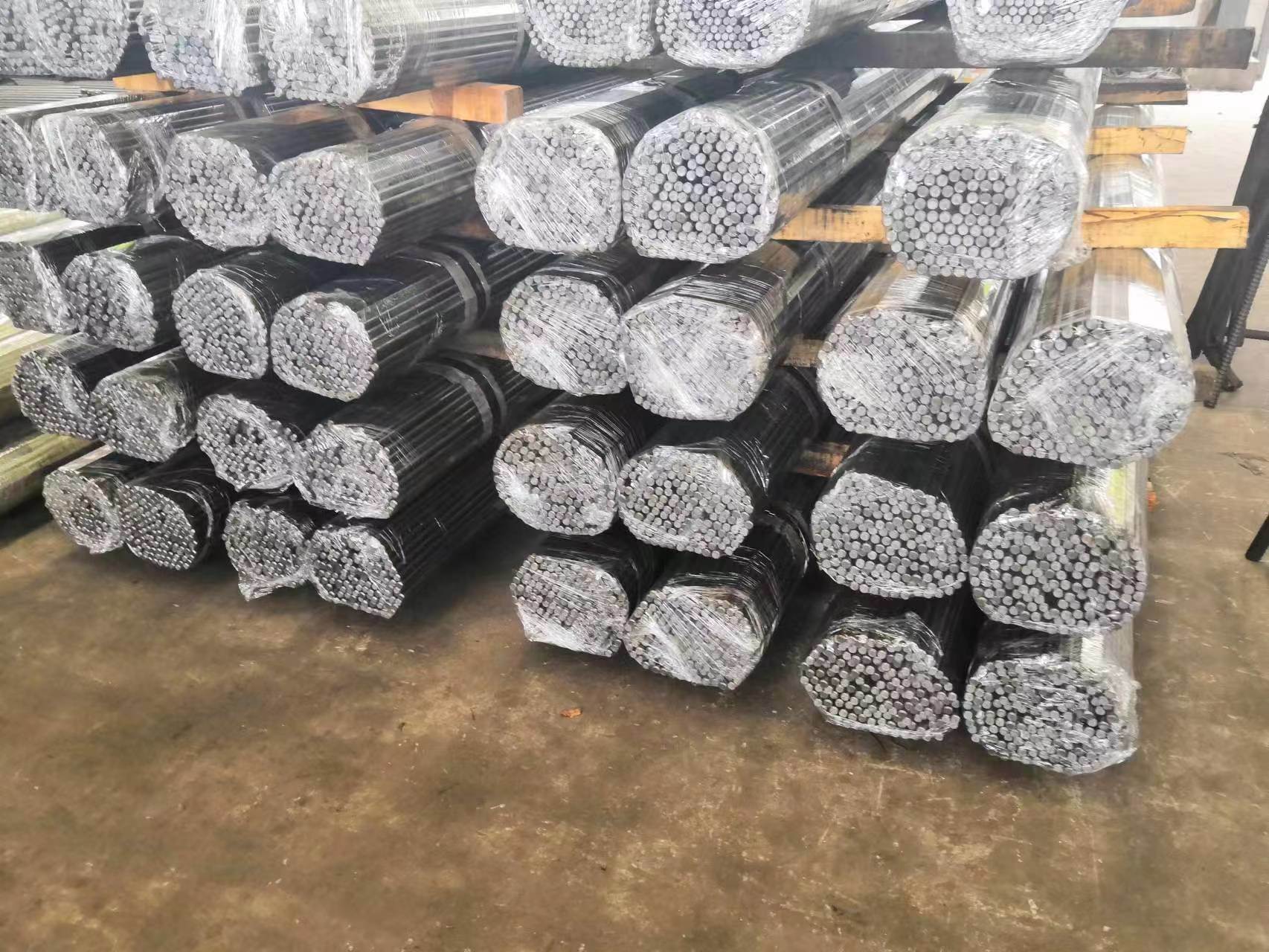
Junxiong Metal can review cold drawn round, hexagonal, square, flat and drawing-based custom solid profiles. Availability varies by grade, section size, tolerance, length and quantity. The phrase “all shapes available” should never be assumed without a written feasibility review.
- Cold drawn round steel bar
- Cold drawn hexagonal steel bar
- Cold drawn square steel bar
- Cold drawn flat steel bar
- Custom cold drawn steel profiles
Technical Facts
- Non-leaded sourcing families: 1215, 11SMn30 / 1.0715 and SUM23 are common search routes, subject to the governing standard.
- Leaded sourcing families: 12L14, 11SMnPb30 / 1.0718 and SUM24L require explicit lead acceptance and end-market review.
- Available forms for review: round, hexagonal, square, flat and drawing-based solid profiles.
- Order controls: standard, grade, size, tolerance, straightness, surface, length, quantity and inspection records.
- Equivalence rule: similar sourcing intent does not make cross-standard designations automatically interchangeable.
Buyer Checklist for a Comparable Quote
- Governing standard, edition and exact grade designation.
- Leaded or non-leaded requirement and destination-country restriction.
- Round diameter, hex across flats, square side, flat width and thickness, or section drawing.
- Dimensional tolerance, straightness, corner radius and surface requirement.
- Delivery condition, cut length, end condition and secondary processing.
- Trial quantity, annual demand, delivery country and required shipment schedule.
- Required material certificate, chemical, mechanical, hardness or dimensional records.
What Documents Should Be Requested?
State the required document type in the RFQ. A general company certificate does not prove that a specific heat complies with a specific grade. Order-specific conformity should be tied to the accepted standard, heat or batch identification and agreed inspection records. If a third-party test or a special acceptance plan is required, it must be agreed before production and included in the quotation.
Frequently Asked Questions
Can I write “1215 or equivalent” on the RFQ?
It is better to identify the acceptable standard, chemistry and inspection limits. If alternatives are allowed, list the acceptable designations and the approval process.
Which grade is better for Swiss-type machining?
The answer depends on the part, cycle-time target, lead restriction, strength, surface, thread or forming operation and service condition. Machinability alone is not a complete selection criterion.
Can a leaded grade be supplied to every country?
No assumption should be made. The buyer must review destination-country, customer and end-use restrictions and state the approved material on the purchase order.
Can Junxiong quote from a cross-standard comparison?
Yes, as a feasibility review. Send the original standard, grade, drawing and acceptance limits. The final quotation will identify the proposed supply route and required documents.
Can I place an order using only the name 9SMn28?
No. Saarstahl uses 9SMn28 in parentheses with 11SMn30 / 1.0715, but a current order should identify the accepted standard, edition, grade, delivery condition, dimensions and MTC requirements. Do not infer SAE 1215, SUM22 or SUM23 substitution from the historical search name.
Can I order a solid bar using only the material number 1.0711?
No. Public sources use 1.0711 in more than one designation and product-route context. State the exact grade name, governing standard and edition, solid-bar product route, delivery condition, dimensions and inspection requirements. A precision-tube reference must not be converted into a solid-bar order.
Request a Grade and Drawing Review
Send the governing standard, grade, bar shape, dimensions, tolerance, length, quantity, destination country, application and required certificates. For guide-bushing, bar-feeding and straightness requirements, use the Swiss-type CNC cold drawn bar RFQ guide. Review the dedicated 1215 and 12L14 cold drawn bar page or request a quotation.
Email: weiweichen@junxiongmetal.com
WhatsApp: +86 137 7146 9005