
How to Quote Custom Cold Drawn Steel Profiles from Drawings
Short Answer: What Is Needed to Quote Custom Cold Drawn Steel Profiles?
To quote custom cold drawn steel profiles, the supplier needs more than a product name. Buyers should send a dimensioned 2D cross-section drawing, material grade and standard, critical dimensions and tolerances, cut length, trial and annual quantity, surface requirement, secondary processing, application and destination country. A sample or photo can support an initial discussion, but it cannot define hidden dimensions, corner radii, datums or acceptance tolerances. Junxiong Metal reviews drawing-based profiles for OEM components, guide rails, industrial door parts, conductor rail bases and machinery profiles.
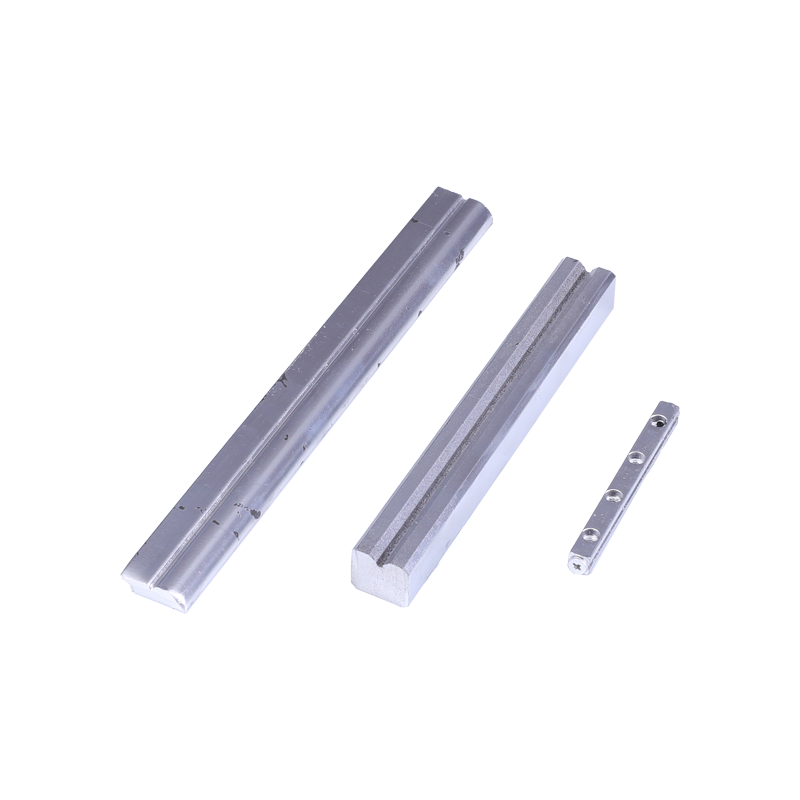
Required Information for a Custom Profile Quotation
| Information | Why It Matters |
|---|---|
| Dimensioned cross-section drawing | Defines the finished shape, datums, corner radii, critical dimensions and acceptance tolerances; a photo is supporting information only |
| Material grade | Confirms whether the grade is suitable for cold drawing and final use |
| Tolerance | Shows which dimensions affect assembly, machining or sliding performance |
| Length and quantity | Affects production method, tooling review, cutting and packing |
| Secondary process | Drilling, punching, cutting or galvanizing should be reviewed before quotation |
| Application | Helps check strength, surface, straightness and inspection requirements |
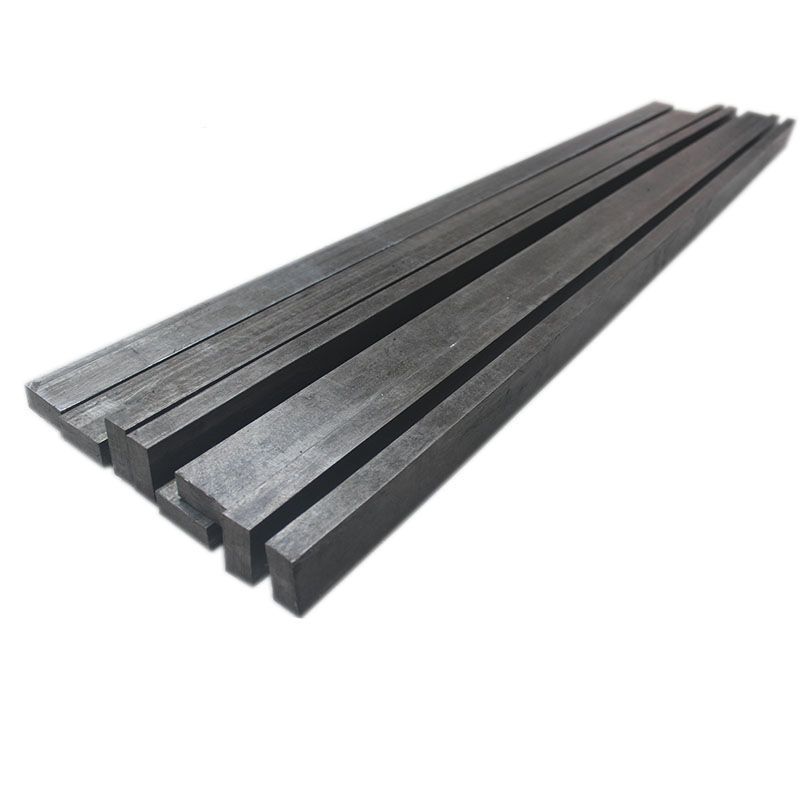
Good-Fit Applications
- Steel profiles for industrial door systems
- Elevator door operator guide rail profiles
- Copper-clad rigid conductor rail steel base profiles
- Cross roller guide rail steel profile blanks
- Armoured joint and floor joint steel components
- Machinery OEM profiles and repeated assembly components
Technical Facts
- Primary input: a dimensioned 2D cross-section drawing is the basis for feasibility and tooling review.
- Critical controls: steel grade, corner radii, dimensional tolerances, straightness, cut length and surface condition.
- Secondary operations: cutting, punching, drilling and galvanizing are reviewed against drawing, quantity and end use.
- Commercial inputs: trial quantity, annual demand, destination country, packing and required inspection records.
- Application fit: repeated OEM sections where near-net-shape stock may reduce machining allowance and material waste.
What Makes a Custom Profile Drawing Quote-Ready?
A quote-ready drawing separates dimensions that control assembly or function from dimensions that are only reference values. It should identify the finished cross-section, datum surfaces, inside and outside radii, straightness or twist requirements, cut length and any area that will be machined after cold drawing. General notes such as “high precision” or “same as sample” are not measurable acceptance criteria.
| Drawing Item | Minimum Information for Review |
|---|---|
| Cross-section geometry | Closed dimensions, corner radii, angles, grooves, steps and datum surfaces |
| Critical tolerances | Individual tolerances only where assembly, sliding, clamping or machining depends on them |
| Length controls | Cut length, length tolerance, straightness and twist requirement over the stated length |
| Material requirement | Grade, governing standard, heat-treatment condition and required inspection certificate |
| Downstream work | Machining allowance, holes, threads, punching, welding areas, plating or galvanizing |
For standard bars, also review the tolerance, straightness and cut-length specification guide. For section-size feasibility, use the size range and RFQ guide.
Feasibility Review: When Is Cold Drawing the Right Route?
Cold drawing is most useful for repeated profiles where near-net shape can reduce machining allowance, material waste or fixture complexity. It is not automatically the lowest-cost route for a one-off part or an unconfirmed design. During feasibility review, Junxiong checks whether the geometry can be drawn consistently, whether the requested grade is suitable for the route, which dimensions are process-critical and whether tooling and a trial lot are commercially justified.
- Geometry: severe section changes, very sharp internal corners or poorly supported features may require a radius change or another process.
- Tolerance: every dimension should not be assigned the tightest tolerance; identify only the dimensions that control function.
- Material: similar grade names across countries are not treated as automatic equivalents. The ordered standard and required properties must be confirmed.
- Volume: provide trial quantity and expected annual demand so tooling and production assumptions can be evaluated.
- Secondary work: punching, drilling, machining, welding and coating requirements can affect datum selection, allowance and packing.
Typical Drawing-to-Production Approval Path
- RFQ review: confirm drawing revision, grade, critical dimensions, length, quantity, application and destination.
- Feasibility feedback: identify missing data, manufacturability concerns and any quotation assumptions before tooling.
- Tooling and trial: agree tooling scope, trial quantity and the dimensions to be checked on trial material.
- Sample approval: compare the agreed first article or trial section with the approved drawing and inspection method.
- Batch release: confirm inspection records, marking, rust protection, bundle limits and export packing before shipment.
The exact route depends on the profile and order. Tooling, sample approval, testing and secondary processing are supplied only when they are included in the agreed quotation.
Inspection and Export Packing Details to Put in the RFQ
State how critical dimensions will be measured and which documents must accompany the shipment. If a material certificate, dimensional report, hardness result or other test record is required, list it before quotation rather than after production. Overseas buyers should also specify surface protection, wrapping, bundle weight, lifting restrictions, end protection, marks and destination port. These details can change both cost and packing design.
Do not request a firm production quote from a photo alone. A photo cannot reliably show scale, hidden geometry, radii, tolerance, material standard or inspection conditions. Send the current drawing revision and mark any confidential information that can be removed while retaining the dimensions needed for feasibility review.
Product Standards and Drawing-Control Boundary
- ASTM A108-24: the active ASTM product specification for carbon and alloy cold-finished steel bars when that route is stated in the RFQ.
- BS EN 10277:2018: technical delivery conditions for bright steel products under an EN purchase route.
- ASTM A276/A276M-25: an ASTM route for stainless steel bars and shapes; it is separate from carbon and alloy bar requirements.
Quotation boundary: a general bar standard does not define a custom section. The controlled cross-section drawing, revision, datum scheme, critical dimensions, corner radii, straightness, twist, length, delivery condition, inspection plan and heat-specific MTC must be agreed before production. Publisher links are references, not Junxiong batch certificates or first-article approval.
Buyer Checklist
- 2D drawing or sample photo
- Material grade and standard
- Critical dimensions and tolerance
- Required length
- Batch quantity and annual quantity
- Surface condition or galvanizing requirement
- Drilling, punching or cutting requirement
- Destination country and packing method
Prepare the RFQ before sending the drawing: Download the one-page Cold Drawn Steel RFQ Checklist (PDF), complete the applicable fields, and send it with your drawing or specification.

Send a Drawing for Feasibility Review
Send the current drawing revision, governing material standard, critical dimensions and tolerances, length, trial and annual quantity, destination country and required inspection documents. Junxiong will review the cold-drawing route and identify missing quotation inputs before a production commitment.
Submit the custom-profile RFQ, send the drawing context by WhatsApp, or email the enquiry.
FAQ
Can Junxiong quote a custom profile without a drawing?
A rough discussion can start from a photo, but accurate quotation usually requires a section drawing, material grade, critical dimensions, tolerance, length and quantity.
Can custom cold drawn profiles reduce machining cost?
For repeated production, a custom profile can reduce machining allowance, material waste and processing time compared with machining the entire shape from standard bar stock.
Can punching or galvanizing be included?
Cutting, punching, drilling and galvanizing requirements can be reviewed by drawing and quantity. These requirements should be confirmed before quotation.
Who should use custom cold drawn steel profiles?
High-fit buyers include OEM manufacturers, steel distributors, industrial door companies, elevator component manufacturers, conductor rail manufacturers and machinery component buyers.